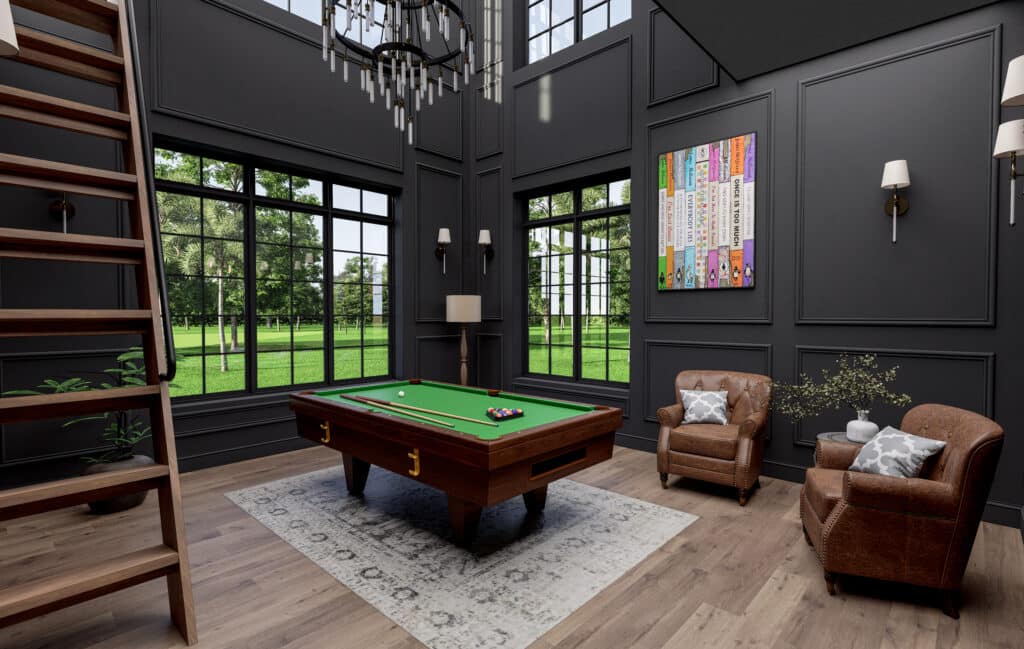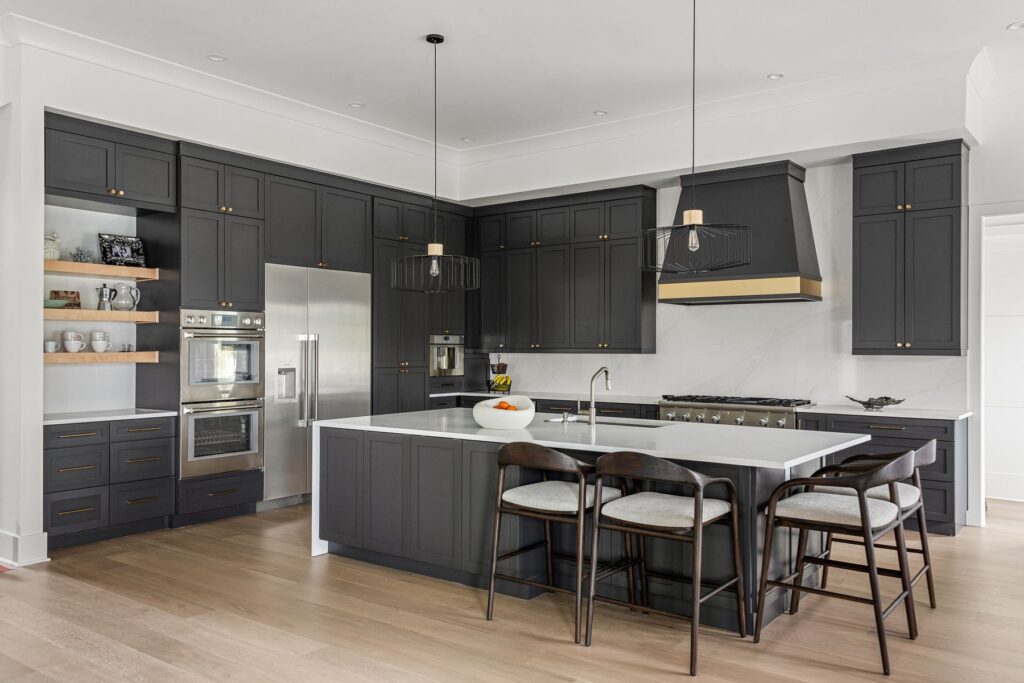
Walk into any luxury home tour and the conversation defaults to the same subjects. The countertop selection. The fixture brand. The imported tile in the primary bath. The chef's appliance package.
All of it matters. But none of it is what makes a home luxurious.
The features that separate a genuinely great home from a merely beautiful one are almost never the ones visible on the tour. They are the structural decisions made before the drywall went up. The material choices that will still be paying off in year twenty. The systems that work so quietly a family forgets they exist. The details that only reveal themselves when a house is asked to perform under stress.
Real luxury is what you don't have to think about. And it is what most builders don't want you to look at.
The Finishes Conversation Is Easier
There is a reason the industry talks so much about finishes. They are the easiest thing to sell.
A family can see a countertop. They can touch a faucet. They can imagine themselves cooking in the kitchen while looking at a marble island. Finishes photograph well. They compare easily across builders. They fit into a decision-making process the family can wrap their head around.
The problem is that finishes are also where cost gets moved when a builder needs to preserve margin. If the client is focused on the countertop, the builder can quietly reduce the framing schedule, the insulation package or the mechanical design. The client sees the granite. The compromises live behind the walls.
A luxury home built the right way spends real money in the places the client will never see. That is what makes it luxurious.
The Structure That Nobody Sees
The most important decisions in a home are made at the framing stage.
Wall sheathing that resists moisture. Framing spacing tighter than code requires. Roof structure that can handle a Category 5 storm and still perform for the next fifty years. Header sizes over openings that account for the loads a cheaper builder does not calculate. Steel where wood would technically be legal but will not hold up over time.
These decisions add cost that never shows up on a spec sheet. They also produce a home that sits differently on the lot for the next fifty years. It does not settle where cheaper homes settle. It does not shift where cheaper homes shift. Doors stay square. Trim stays tight. Floors stay level.
A family living in a Signature home will never know why their home just works. That is exactly the point.
Water Is the Enemy Every Builder Underestimates
In Florida, the single most important line item in a luxury home is the one nobody talks about. Waterproofing. How it gets specified is one of the things we walk through in our guide to building a luxury custom home in Tampa Bay.
Every homebuilder waterproofs to code. Very few waterproof to what this climate actually demands. The difference is enormous, and it is invisible until it isn't.
The Signature Standard treats waterproofing as an integrated system, not a checklist. Continuous membranes at the foundation, not spot treatments. Flashing details at every window, roof and penetration that assume water will find every possible path. Redundant drainage plane systems in every wall assembly. Roof underlayment that would work even if the shingles blew off in a hurricane. Detailing at the joints between materials that recognize where failures actually happen.
A luxury home in Florida is only luxurious as long as it stays dry. Everything else follows from that.
HVAC Design Is a Luxury Feature
Most families think of HVAC as a mechanical box in the garage. In a real luxury home, it is one of the most consequential design decisions in the house.
Manual J load calculations that reflect the actual home, not a rule of thumb. Duct sizing that delivers even temperatures to every room in every season. Return air pathways that keep the primary suite cool without freezing the guest wing. Zone control so a teenager sleeping in and a father who is up at five do not argue about the thermostat.
Humidity control is even more critical in Tampa Bay. A luxury home in this climate needs mechanical dehumidification, not just cooling. A house that cools without controlling humidity feels clammy, encourages mold and slowly degrades wood floors, cabinetry and artwork.
None of this shows up in a photograph. But a family notices immediately when it is done right, and even faster when it is done wrong.
Sound Isolation Is the Silent Luxury
Every luxury home should have real sound isolation between floors, between rooms and between systems. The primary suite should not hear the game room. The guest wing should not hear the kitchen. The teenager on a video call should not compete with a conference call in the home office. A dishwasher in an open-concept great room should not intrude on a dinner conversation.
These outcomes are achieved through decisions made in the framing stage. Staggered stud walls in specific locations. Resilient channels below second floor joists. Solid-core interior doors. Insulation in interior walls where code doesn't require it. Mechanical equipment placed where its noise won't carry.
Sound is the feature that reveals whether a builder is thinking about how a family will actually live in the home. Most aren't.
The Materials That Get Better With Time
Some materials cost more up front and pay for themselves ten times over across the life of the home.
Solid hardwood floors instead of engineered veneer. Real plaster over drywall in the primary spaces. Solid wood interior doors instead of hollow-core. Natural stone that develops character over years of use. Brass hardware that patinas instead of finishes that wear off. Insulation that actually meets its stated R-value. Windows with real thermal breaks and better sealing than the code minimum.
None of this is glamorous. All of it adds up. A house built with these choices feels different at year fifteen than a house built to the standard package. It moves differently. It sounds different. It looks different in the light. The family may never know why. They just know their home aged well.
The Systems That Reveal Themselves Later
Some construction decisions do not matter for the first several years. Then they matter every day for the next thirty.
Electrical service sized for how the home will actually be used, not just how it will pass inspection. Circuits laid out to anticipate the future rather than the present. Plumbing accessible for maintenance without cutting into walls. Duct runs that can be adjusted without tearing apart ceilings. Structural provisions for future additions the family hasn't yet imagined.
These decisions cost the builder a little more today and save the family a lot more tomorrow. They are the ones a builder skips when the margin gets tight and hopes the family never notices.
At Signature, the calculation is different. We build for how the home will perform in year twenty, not just how it will show at closing. That is the entire point.
Luxury Living Insight: The Cost of Skipping the Invisible Work
The construction decisions that separate lasting luxury from surface-level luxury are almost entirely invisible on a tour. And they are precisely where lesser builders reduce cost.
- The NAHB Cost of Constructing a Home study shows that framing, waterproofing, mechanical systems and insulation together account for the largest share of a luxury home's construction cost, more than finishes. Yet these are the categories most often reduced when a builder is competing on price. (National Association of Home Builders)
- Insurance industry data reported through the Insurance Institute for Business and Home Safety indicates that homes built to above-code structural and moisture standards experience significantly fewer catastrophic losses over a thirty-year window, particularly in Florida coastal markets. (Insurance Institute for Business and Home Safety)
What this means: In a luxury custom home, most of the difference between a great home and a merely beautiful one is behind the walls. Ask a builder what they spend on the things you will never see. The answer tells you everything.
What to Look For When You Walk a Home
Most of this is invisible once the drywall goes up, which is exactly the problem for a buyer standing in a finished house. There are still signals worth reading, and they are the ones inspectors and builders look at first.
Start at the foundation and the corners. Cracks or visible sinking at one corner of the structure are the clearest sign that the home does not have good bones, and they are the hardest thing on this list to fix.
Then walk the floors slowly. Dips, slopes or soft spots underfoot point either to work that was not done well or to something structural underneath. Either way it is worth understanding before anything else.
Look for the history of water. Staining, patched ceilings, a musty smell in a closet or a hairline of efflorescence on a wall are all signs of moisture that arrived once and may arrive again. In Florida this is the single most consequential thing to check, because water damage and the electrical problems that follow it are among the most expensive repairs a homeowner will face.
Finally, read the floor plan itself. A layout that does not make sense on the tour will not make more sense after you move in, and unlike finishes it is not something you can change.
Finishes You See, Decisions You Do Not
The two columns cost very different amounts and get very different amounts of attention on a tour.
| What a buyer sees | What determines performance |
|---|---|
| Countertops, cabinetry and fixtures | Framing spacing, sheathing and how the structure was detailed |
| Paint, tile and millwork | Waterproofing beyond code, which matters more in Florida than anywhere in the specification |
| The thermostat on the wall | HVAC sized and zoned for humidity rather than temperature alone |
| A quiet house on a quiet morning | Sound isolation designed between floors, rooms and mechanical systems |
| Floors that look good today | Materials chosen to look better in ten years, not worse |
| Outlets and switches | Electrical service sized for how the house will be used in twenty years |
Luxury You Never Have to Notice
The best luxury homes are the ones a family lives in without ever thinking about them.
The temperature is always right. The humidity is always right. The lights come on when needed. The floors are quiet. The doors close properly. The water pressure is consistent. The house feels solid in a storm. Everything just works, year after year, without demanding attention.
That is the highest form of luxury a builder can deliver. Not a spec list. Not a photograph. A home that recedes into the background of a family's life so that the family can focus on everything else.
At Signature Bay Homes, that is the ambition. Build a house so well that the family stops thinking about the house. Build the invisible things right so the visible things can last. Build a home that will still feel new in year twenty because the parts that hold it together never went anywhere. Because in the end, luxury is what you don't see. And it is the only kind of luxury that actually lasts.
If you are still choosing a builder, the questions worth asking before you sign get at most of this directly. And if you are deciding between a finished home and a build, we compared a spec home against a custom one from both sides.
Where you build shapes how much of this matters, particularly on flood elevation and drainage, which we cover in our guide to Tampa Bay luxury neighborhoods. If you are weighing a build rather than a purchase, how we run a custom build sets out where these decisions actually get made. And on the design side, the shift toward European warmth and restraint is where a lot of that craftsmanship now shows up.
Sources
The figures and features referenced above come from the following published sources. Official government data is listed first.
- Flood Maps — Federal Emergency Management Agency
- Florida Building Code — Florida Department of Business and Professional Regulation
- What Home Buyers Really Want — National Association of Home Builders